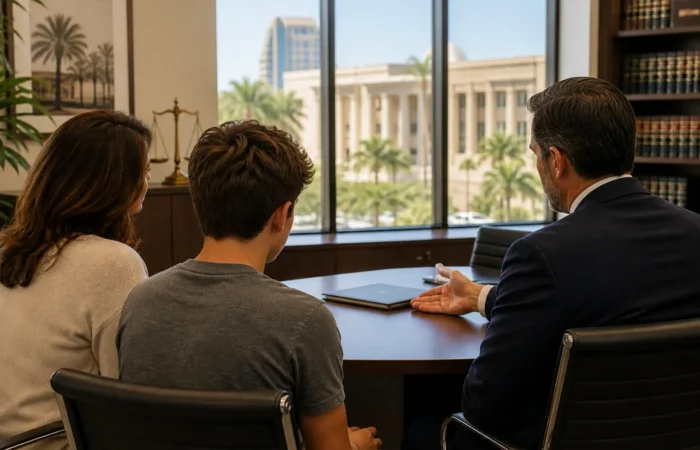
A bond hearing in Broward County can determine whether a person waits for the next stage of a criminal case in custody or under court-ordered release conditions. For a family, the hours before the hearing can feel chaotic. The most helpful response is not a flood of emotional messages. It is a verified custody record, an organized release plan, and reliable information that counsel can present appropriately.
This guide explains how families can prepare for a Broward County bond hearing, which records may matter, and where to find official local information. A bond hearing does not decide guilt or innocence, and no document guarantees release. Natalie Lopez, Esq. represents clients in bond hearings and related criminal matters in Fort Lauderdale and throughout Broward County.
Confirm Where the Person Is Being Held
Start with the official Broward Sheriff’s Office Arrest Search. It can provide the arrest number, custody location, listed charges, and bond information. BSO states that the search is updated regularly, but families should expect information to change as warrants are confirmed and court events occur.
Record the person’s complete name, date of birth, arrest number, booking time, listed charges, and facility. Do not rely on screenshots from an advertisement or an unofficial inmate-search website. The BSO inmate visitor information page also links to jail resources and communication information.

Understand First Appearance Versus a Later Bond Hearing
A first appearance is the initial court event for someone who remains in custody. The Broward Public Defender’s early-representation process explains that the judge addresses probable cause, release, and conditions. A later hearing may involve a request to set or modify bond after counsel has gathered more information and provided notice.
The procedure can differ based on the charge, warrant, assigned judge, prior release status, and whether a hold exists. Families should avoid promising the person a release time before counsel confirms which hearing is actually scheduled.
What a Bond Hearing Does and Does Not Decide
The court considers pretrial release, not the final outcome of the criminal charge. Release may involve a monetary bond, nonmonetary conditions, supervision, electronic monitoring, treatment, travel restrictions, surrender of firearms, or no-contact provisions. Some cases involve legal restrictions or factual disputes that require a more detailed hearing.
Florida’s criminal-procedure framework addresses first appearance and pretrial release. The Florida Courts website is the official source for court information and current rules. A lawyer can explain which current provisions apply to the exact charge and procedural posture rather than treating every arrest the same.
Build a Verifiable Release Plan
A release plan should answer practical questions: Where will the person live? How will they get to court? Who can help them follow conditions? Will employment, treatment, medication, childcare, or school require coordination? The answers should be accurate and capable of verification.
Useful materials can include a lease, utility record, letter confirming residence, work schedule, employer contact, school enrollment, transportation plan, medical appointment information, or treatment intake date. Do not create backdated letters or pressure anyone to exaggerate. A short credible packet is more useful than a large stack of unsupported claims.
Document Local Ties Without Overstating Them
Family relationships, length of residence, employment, education, caregiving duties, and past court attendance may be relevant to whether a person will return to court. Provide counsel with dates, addresses, names, and supporting records. Explain any recent move or job change rather than allowing it to look like an inconsistency.
If the client lives outside Broward County, identify a realistic local or remote supervision plan. If travel is necessary for work, preserve the schedule and employer contact. The goal is a plan the client can actually follow if the court imposes restrictions.
Identify Holds, Warrants, and Existing Supervision
A listed bond does not necessarily mean immediate release. Another county’s warrant, immigration detainer, probation hold, pretrial-release issue, or separate case can affect custody. Tell counsel about every known case and supervision status, even if it seems unrelated.
A person arrested while on probation may need advice concerning violations of probation in addition to the new accusation. Someone with an injunction or no-contact order should provide a copy and discuss the current restrictions before calling or messaging anyone named in the order.
Prepare for No-Contact and Other Release Conditions
No-contact conditions can prohibit direct and indirect communication. That may include calls, texts, social-media messages, communication through relatives, or visiting a home or workplace. Do not assume the other person’s willingness to communicate changes the order. Only the court can modify a court-ordered condition.
Families should identify a lawful place to live and a way to collect necessary belongings without creating contact. This is particularly important in domestic violence cases, stalking allegations, and alleged injunction violations.
Organize Medical, Mental-Health, and Treatment Needs
Provide counsel with accurate information about urgent medication, disability, medical appointments, mental-health care, or substance-use treatment. Do not send private medical records broadly; ask counsel which records are needed and how they should be handled.
When treatment is appropriate, the federal FindTreatment.gov locator can help families identify mental-health and substance-use providers. A program should be selected for genuine clinical and practical fit. Enrollment does not guarantee a particular bond result.

How Bond Can Be Posted After the Court Acts
The official BSO bond instructions describe how to confirm charges and bond information and explain cash and surety bond procedures. The page lists identifying information required for payment and warns that procedures and fees differ by payment method.
Do not pay an unknown caller who demands immediate payment through gift cards, cryptocurrency, or a personal transfer. Verify the person’s custody record and use official BSO instructions. A bonding company is a separate private business; understand its fee, collateral, and contract before signing.
Find the Filed Case and Assigned Court
The Broward Clerk public case search can help locate filed cases. The Clerk’s felony division guide explains access to felony records and court-hearing information. Arrest data and court data serve different purposes, so check both when counsel asks for a case number or filed document.
Save the assigned judge, division, case number, hearing date, and any available orders. Do not contact the judge directly about the merits of the case. Questions about scheduling or filings should be handled through counsel and the proper clerk or judicial-assistant procedures.
What Counsel May Review Before Asking for Release
A bond lawyer may review the probable-cause affidavit, charge level, warrant language, criminal history, prior court attendance, existing supervision, alleged victim information, residence, employment, finances, and proposed conditions. In a violent-crime allegation or firearm case, safety conditions may receive particular attention.
The lawyer may also need to resolve incorrect or incomplete background information. Provide certified or official records when available. If a prior case was dismissed or sealed, tell counsel instead of assuming it will be interpreted correctly without documentation.
Do Not Discuss the Facts on Recorded Jail Calls
Use jail calls for immediate logistical information, not a detailed account of the arrest. The Broward Public Defender’s court-process guide cautions against discussing case facts on jail telephones or with other people. Family members should not ask the client to explain witnesses, evidence, or defenses on a recorded line.
Tell the person the lawyer’s name, hearing information, and any essential family updates. Save substantive discussion for confidential communication with counsel.
If Private Counsel Has Not Yet Been Retained
The Broward Public Defender’s Early Representation Unit states that it provides representation to newly arrested defendants in First Appearance Court. Eligibility and later appointment involve an application process. Families can use that official resource while deciding whether to retain private counsel.
The Florida Bar also publishes a consumer guide on how to hire a lawyer. Ask who will appear, what the fee includes, how quickly custody records can be reviewed, and how the office communicates with families. Avoid any lawyer who promises a guaranteed release.
What to Send a Bond Hearing Lawyer
- Full name, date of birth, arrest number, facility, and booking time.
- Listed charges, bond amounts, holds, warrants, and next hearing information.
- Probable-cause affidavit, warrant, court order, and case number if available.
- Accurate residence, employment, school, childcare, and transportation records.
- Medical, treatment, or disability information that may affect custody or release.
- Prior case numbers and proof of past court attendance when relevant.
- A proposed third-party contact and lawful residence for release.
Natalie Lopez, Esq. can evaluate a Broward custody situation and explain whether the immediate event is first appearance, a bond motion, or another hearing. Review the firm’s Fort Lauderdale bond-hearing services or request a confidential consultation.
Common Mistakes Families Can Avoid
- Relying on an unofficial inmate website instead of BSO and the Clerk.
- Promising release before holds and hearing status are confirmed.
- Discussing the accusation on a recorded jail call.
- Contacting an alleged victim or witness to change a statement.
- Sending private medical records to a large group.
- Submitting exaggerated residence or employment information.
- Ignoring another warrant, probation case, or no-contact order.
- Paying an unverified caller who claims to collect bond money.
Questions About Broward County Bond Hearings
Does a bond amount guarantee release?
No. Holds, warrants, probation status, pretrial detention issues, and court-ordered conditions can affect whether and when release occurs.
Can a family member speak directly to the judge?
Family information should generally be organized through counsel and presented through proper court procedures. Do not contact the judge privately about the case.
What makes a release plan useful?
Accuracy and verification. A specific residence, transportation plan, work schedule, support person, and method for complying with conditions are more useful than broad promises.
Can bond be changed later?
Sometimes a properly noticed request may seek a modification, but the available procedure and likelihood depend on the charge, prior ruling, evidence, and current law. Counsel must review the individual record.
Speak With a Broward County Bond Hearing Lawyer
Bond preparation should begin with verified custody information and a realistic plan. Natalie Lopez, Esq. can review the arrest record, identify holds or conditions, organize supporting information, and advocate at the appropriate hearing. Call 954.888.8833 or use the firm’s online contact page.
Types of Criminal Cases We Handle in Broward County
Natalie Lopez, Esq. defends clients across a broad range of criminal charges, including:
- DUI & Traffic Offenses
- Violent Crimes
- Drug Crimes
- Federal Charges
- Sex Offenses
- Weapon Offenses
- Juvenile Delinquency
- Child Abuse
- Economic Crimes
- Resisting Arrest
- Bond Hearings
- Violations of Probation
- Theft & Property Crimes
- Prostitution & Solicitation
- Seal & Expunge Criminal Record
- Domestic Violence
- Dating Violence
- Defending Yourself Against a Petition
- Domestic or Dating Violence/Stalking Injunctions
- Petition for Injunction
- Repeat Violence
- Sexual Violence
- Stalking
- Violations of Domestic Violence Injunctions
- Violations & Penalties
- Victim Advocacy
- Criminal Law
Call a Broward County Probation Violation Attorney Today
If you’ve been accused of violating probation in Broward County or Fort Lauderdale, don’t wait. The consequences can be severe, but with the right defense, you may still have options. Contact Natalie Lopez, Esq. today for immediate help.
Phone: 954.888.8833
Email: NLopez.Esq@Gmail.com
Website: https://nlopezesq.com