Fighting domestic violence charges in Fort Lauderdale begins with protecting evidence, obeying every release condition, and reviewing the entire encounter rather than relying on a short arrest narrative. These cases can involve conflicting accounts, 911 audio, body-camera footage, injuries, self-defense claims, text messages, family-court issues, and immediate restrictions on contact or returning home.
This guide explains how a defense lawyer may organize those issues and what an accused person should preserve. It is general information, not legal advice or a promise of a particular result. Natalie Lopez, Esq. represents people facing domestic violence charges in Broward County and offers confidential consultations about specific cases.
First Steps for Fighting Domestic Violence Charges
Save the booking sheet, probable-cause affidavit, bond paperwork, no-contact order, property receipt, court notice, and any injunction papers. Read every condition before leaving custody. If the order prohibits direct or indirect contact, do not call, text, email, visit, send a message through another person, or respond to an invitation without legal advice and a court-approved change.
Write a private timeline for counsel beginning before the disagreement and continuing through police arrival, questioning, arrest, and release. Identify where each person stood, who called 911, what officers saw, whether anyone was injured, which rooms or exterior areas had cameras, and where children or other witnesses were located. Do not post that account online.

What Florida Classifies as Domestic Violence
Florida Statute 741.28 defines domestic violence through specified alleged offenses committed between family or household members. The definition includes spouses, former spouses, certain relatives, people who live or previously lived together as a family, and parents of a child in common.
The domestic relationship is a legal classification attached to an underlying allegation such as battery, assault, stalking, false imprisonment, or another qualifying offense. A defense review should identify the exact charged offense, the relationship alleged, and the evidence for each required element rather than treating the domestic-violence label as a complete charge by itself.
The Initial Police Decision Is Not the Final Case
Florida’s domestic violence investigation statute addresses law-enforcement reports, probable-cause arrests, separate evaluation of competing complaints, and primary-aggressor analysis. The statute also explains that an arrest decision does not require the alleged victim’s consent.
An arrest establishes that an officer made a probable-cause decision at the scene; it does not decide guilt. Counsel may compare the report with recordings, physical evidence, witness locations, dispatch information, and the sequence before police arrived. Details omitted during a fast-moving response can become important later.
Primary-Aggressor and Self-Defense Evidence
When both people make accusations, counsel may examine relative injuries, threats, witness accounts, prior communications, size and position, attempts to leave, calls for help, and whether conduct was defensive. The issue is not resolved simply by who called first or who spoke to police most confidently.
Preserve evidence showing attempts to disengage, leave, seek assistance, or protect another person. Do not create new messages to explain self-defense after the arrest and do not ask a witness to adopt a preferred version. Original records and independent recollections carry more value than coordinated accounts.
911 Audio and Dispatch Records Can Establish the Timeline
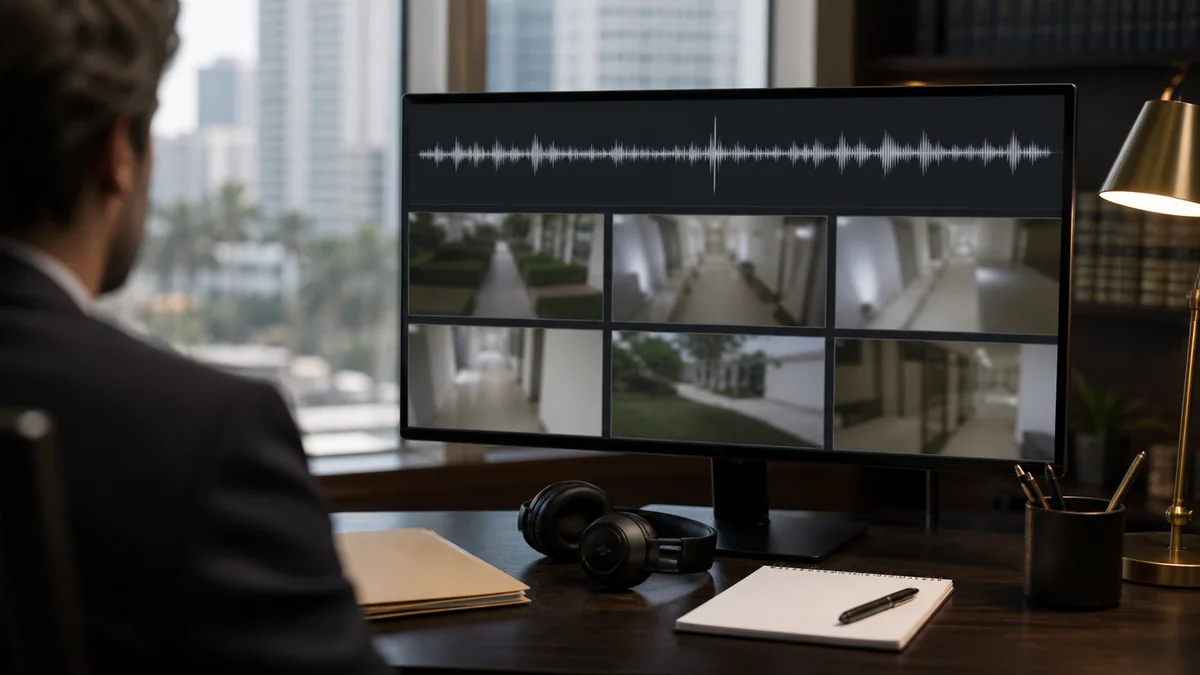
A 911 call may capture background voices, timing, tone, contemporaneous statements, and information relayed to responding officers. Dispatch logs may show when calls were received, what officers were told, arrival times, and whether multiple callers contacted law enforcement. These records should be compared with the report rather than summarized from memory.
The Broward Sheriff’s Office public-records page describes requests for records maintained by BSO. A public-records request is not the same as criminal discovery, and another agency may hold the relevant audio or report. Counsel can identify the correct preservation and production process.
Body-Camera and Other Video Evidence
Body-camera footage may show the condition of the home, visible injuries, each person’s demeanor, spontaneous statements, officer questions, and the position of witnesses. It may begin after the central event and cannot show conduct outside the camera’s view. The Fort Lauderdale Police Department’s official body-worn camera policy discusses both the purpose and physical perspective limits of these recordings.
Doorbell cameras, apartment systems, hallway video, home security, vehicle cameras, and neighbors’ recordings may capture arrivals, departures, sounds, or movement. Write down locations and time ranges promptly because private systems can overwrite footage. Do not contact a prohibited person to request a recording.
Photographs, Injuries, and Medical Records
Preserve original photographs taken by either person, witnesses, police, or medical providers. Take accurate follow-up photographs if bruising or swelling changes, and retain the original files with metadata. If medical care is needed, seek it for health reasons and describe symptoms honestly.
Absence of a visible injury does not by itself resolve every allegation, and an injury does not automatically establish how it occurred. Counsel may compare location, shape, timing, prior condition, treatment records, statements, and whether injuries are consistent with defensive conduct or the reported sequence.
Messages and Digital Evidence Need Complete Context
Save complete text threads, call logs, voicemails, emails, social messages, shared-account activity, location history, and relevant photographs. A single screenshot can omit dates or surrounding conversation. Export or back up records without cropping, annotating, or deleting unfavorable content.
Do not access another person’s private account or device. If the accused person is locked out of a shared account, preserve evidence of authorized access and let counsel evaluate the lawful way to obtain records. Selective deletion can damage credibility and create separate preservation problems.
Witness Changes Do Not Automatically End a Case
An alleged victim may later provide more context, decline contact, change an account, or ask that charges be dropped. The prosecution, not a private person, controls the criminal charging decision. A later statement will be evaluated with prior statements, recordings, physical evidence, and other witnesses.
The accused person should not request a recantation, affidavit, or favorable message. Contact can violate a release order and may be interpreted as pressure. If a witness independently contacts the defense, preserve the communication and give it to counsel without directing what the person should say.
No-Contact Conditions Must Be Followed Exactly
A no-contact order can affect communication, housing, children, pets, property, finances, and employment. Even when both people want contact, only the court can modify a court-imposed condition. Florida law provides separate consequences for willfully violating certain pretrial-release conditions after a domestic-violence arrest.
Ask counsel how to request a lawful modification and how to handle necessary belongings or shared responsibilities. Do not use a child, family member, friend, coworker, social account, or payment-app note to pass a message. Preserve unsolicited incoming contact, but do not respond unless counsel confirms it is permitted.
Criminal Charges and Civil Injunctions Are Separate Proceedings
A criminal case and a petition for injunction can arise from the same incident but follow different procedures. The Broward Clerk Domestic Violence Division explains that an injunction can restrict contact, residence access, workplaces, schools, and temporary child-related arrangements.
Do not assume evidence filed in one matter will automatically appear in the other. Preserve the petition, temporary order, hearing notice, exhibits, and service documents. Review the firm’s guidance on defending against a petition for injunction and domestic, dating, and stalking injunctions.
Children, Housing, and Property Require a Lawful Plan
Release and injunction orders may affect returning home, school pickup, parenting exchanges, or contact involving children. Follow the most restrictive current order until counsel clarifies the situation. Keep family-court orders, school records, leases, mortgage information, and parenting communications organized.
Do not enter a prohibited residence to retrieve clothing, medication, work equipment, or a vehicle without an authorized process. Ask counsel about lawful property retrieval and whether family-court coordination is needed. A related parenting dispute should not become a channel for indirect prohibited contact.
First Appearance, Bond, and Court Dates
The Broward Public Defender’s early representation guide explains that first appearance addresses probable cause, release, and conditions. The office’s criminal court process guide provides additional context about later stages.
Confirm the court case number, division, next date, and whether personal appearance is required. Missing court can lead to a warrant and bond consequences. If release conditions need review, the firm’s Broward bond hearing information explains why holds and conditions may matter in addition to a monetary amount.
Employment, Firearms, Immigration, and Licensing Concerns
A domestic violence allegation can affect employment, professional licensing, housing, immigration, family court, and firearm possession. Preserve notices and deadlines but avoid submitting a detailed written admission to an employer, agency, or licensing board before obtaining advice.
Noncitizens should consult qualified immigration counsel about immigration-specific consequences. Firearm questions can involve state and federal law, release conditions, injunctions, and case outcomes; individualized advice is essential. Do not transfer or possess property in a way that conflicts with a court order or applicable law.
What to Bring to a Domestic Violence Defense Consultation
- The arrest number, court case number, next hearing, and current custody status.
- The probable-cause affidavit, booking sheet, release conditions, and bond paperwork.
- Any injunction petition, temporary order, hearing notice, and family-court order.
- A private timeline beginning before the incident and ending after release.
- Original photographs, video, messages, call logs, voicemail, and location records.
- Names, contact information, and vantage points for witnesses, without coaching them.
- Camera locations and time ranges for residences, hallways, vehicles, and neighbors.
- Medical records, prior relevant communications, and information about children or housing.
- Details about probation, immigration, employment, licensing, firearms, or another case.
The Florida Bar offers a public guide on how to hire a lawyer, including questions about experience, fees, communication, and who will handle the work. A focused consultation should identify immediate evidence and compliance issues, not simply repeat the accusation.
Common Mistakes While Fighting Domestic Violence Charges
- Responding to contact despite a no-contact order.
- Using another person or account to pass a message.
- Deleting texts, calls, photographs, social posts, or location history.
- Asking an alleged victim or witness to recant or sign a statement.
- Returning to a prohibited home, school, or workplace.
- Posting accusations, injuries, or a defense theory online.
- Missing criminal, injunction, or family-court hearings.
- Ignoring immigration, employment, licensing, housing, or firearm consequences.
Questions About Fighting a Fort Lauderdale Domestic Violence Case
Can the alleged victim drop the charges?
The alleged victim can provide information, but the prosecution controls the criminal charging decision. Counsel should review all statements and evidence without encouraging prohibited contact or pressure.
What if both people were injured?
Each injury, statement, movement, and defensive claim needs individual review. Florida law directs officers handling competing complaints to evaluate them separately and consider the primary aggressor.
Can I go home if the other person says it is okay?
Not when a court order prohibits it. A private invitation does not modify a release condition or injunction. Ask counsel about a court-approved modification or authorized property retrieval.
Where can my family confirm custody information?
The official BSO Arrest Search can help confirm custody and arrest information. Filed case information may be available through the Broward Clerk public case search.
Speak With a Fort Lauderdale Domestic Violence Defense Lawyer
Fighting domestic violence charges in Fort Lauderdale requires disciplined compliance and a fact-specific review of the relationship, alleged offense, 911 call, recordings, injuries, messages, witness accounts, and parallel orders. Natalie Lopez, Esq. can evaluate those materials and identify evidence that should be preserved immediately. Call 954.888.8833 or request a confidential domestic violence defense consultation.
Additional resources include how domestic violence evidence is reviewed, what to do after a domestic violence arrest, and hiring an attorney for domestic violence charges.