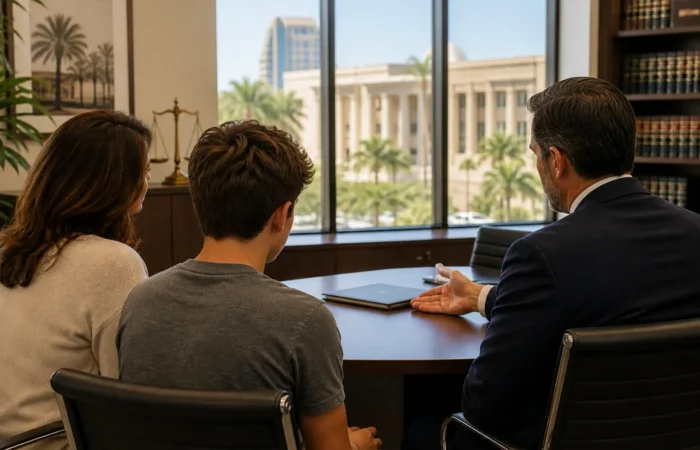
Hiring an attorney for domestic violence charges in Fort Lauderdale is an important step when an arrest, release condition, no-contact order, or related injunction can affect daily life immediately. The first days of a case may involve a court appearance, restrictions on contact or returning home, evidence that can disappear, and decisions that should not be made without understanding the written orders.
Natalie Lopez, Esq. represents people facing domestic violence allegations in Fort Lauderdale and throughout Broward County. A confidential defense consultation can help identify the pending charge, current restrictions, court dates, evidence-preservation needs, and the practical next step. Every case is fact-specific, and no attorney can promise a particular result.

What a Domestic Violence Defense Attorney Reviews First
An attorney should begin with the actual paperwork rather than assumptions about what was charged. Bring the arrest affidavit, bond or release order, first-appearance paperwork, court notices, and any petition or temporary injunction. Those documents may identify immediate deadlines and restrictions that apply before the evidence has been fully reviewed.
The initial review should also separate a criminal prosecution from a civil injunction proceeding. The matters may involve the same event, but they can have different case numbers, hearings, standards, and consequences. Statements or evidence presented in one proceeding may affect the other, so coordinated planning matters.
How Florida Defines Domestic Violence
Florida Statute 741.28 identifies qualifying acts and describes the family or household relationships covered by the statute. Whether a particular allegation meets the statutory definition depends on the alleged conduct and the relationship involved.
A label in a police report does not replace a careful legal analysis. Counsel should compare the accusation with the charged statute, evaluate whether the relationship falls within the relevant definition, and identify every element the prosecution would be required to prove.
Follow Release Conditions and No-Contact Orders Exactly
A release condition or court order remains enforceable until the court changes it. Do not assume that a family member’s invitation, a message from the complaining witness, or a private agreement cancels a written no-contact restriction. Contact can include calls, texts, social-media activity, indirect messages through another person, or appearing at a prohibited location.
If an order creates a problem involving housing, children, work, property, medication, or pets, ask counsel about a lawful way to address it. A new allegation involving prohibited contact can complicate the original case and may create a separate charge or bond issue. Learn more about alleged violations of domestic violence injunctions.
Evidence to Preserve After a Domestic Violence Arrest
Useful evidence varies by case, but preservation should begin promptly. An attorney may examine:
- Police reports, body-camera footage, dispatch records, and 911 recordings;
- Complete text, email, and social-media conversations rather than selected screenshots;
- Original photos and videos with available date, time, and location data;
- Medical records, property records, and relevant surveillance footage;
- Witnesses who personally observed events before, during, or after the allegation;
- Prior court orders and records relevant to the relationship or alleged incident; and
- A private timeline distinguishing what you personally know from what someone else reported.
Do not delete messages, alter files, enter another person’s account, ask a witness to change an account, or contact a protected person about the evidence. Preserve original materials and let counsel assess relevance and lawful use. Our related guide explains how domestic violence evidence may be reviewed in Fort Lauderdale.
The Criminal Case and a Civil Injunction Are Different Proceedings
A criminal charge is prosecuted by the State. A domestic violence injunction is a civil protective-order proceeding requested through a petition. A person may face one or both matters, and the outcome or schedule of one does not automatically control the other.
The Florida Courts overview for injunction respondents explains the importance of reading the papers, complying with a temporary injunction, and appearing for the scheduled hearing. If you have been served, review the separate guidance on Broward County injunction hearings and defending against an injunction petition.
Can the Complaining Witness Drop the Charge?
A complaining witness may communicate a position to law enforcement or prosecutors, but that person generally does not control whether the State continues a criminal case. Prosecutors make charging and dismissal decisions after reviewing the available evidence and applicable law.
Do not ask anyone to change testimony, withdraw a statement, avoid court, or ignore a subpoena. Those actions can create additional concerns. Defense counsel can communicate through proper channels, investigate inconsistencies, and present lawful information without violating a no-contact order.
Questions to Ask Before Hiring Domestic Violence Counsel
Use the consultation to understand the lawyer’s approach and the work that may be required. Helpful questions include:
- Which court dates, restrictions, and deadlines require immediate attention?
- Is there a related injunction case or hearing that needs separate preparation?
- Which police recordings, messages, photos, or witness accounts should be requested or preserved?
- Who will handle the case and communicate with me?
- How are fees, costs, and potential expert expenses explained?
- What facts or documents are still missing before a strategy can be evaluated?
- How should unexpected contact or a property-retrieval issue be handled?
A useful consultation should explain uncertainty honestly. Be cautious of guarantees, pressure to sign immediately without understanding the agreement, or advice that treats a written court order as optional.
Collateral Issues to Discuss With Your Attorney
Domestic violence allegations may affect more than the criminal docket. Depending on the circumstances, a case can intersect with housing, employment, professional licensing, firearms, immigration, parenting, or family-court matters. Tell counsel about any current divorce, paternity, timesharing, injunction, immigration, or professional-license issue.
A criminal defense lawyer can identify areas that need coordinated advice, but another attorney may be required for immigration, family-law, or licensing questions. Early disclosure helps avoid conflicting strategies and missed deadlines.
What to Bring to a Fort Lauderdale Consultation
Bring every court paper, the full arrest paperwork, a list of upcoming dates, current contact restrictions, and a concise timeline. Save relevant electronic evidence in its original form and bring complete message threads when possible. Write down the names and contact information of potential witnesses, but do not coach them.
Also prepare a list of medications, work obligations, childcare issues, travel plans, or other practical concerns that may be affected by release conditions. The goal is not to create a perfect presentation. It is to give the attorney accurate information needed to identify risks and next steps.
Why Local Preparation Matters in Broward County
Hiring an attorney for domestic violence charges in Fort Lauderdale should involve more than choosing a familiar legal phrase from an advertisement. Ask how the attorney approaches Broward County scheduling, evidence requests, negotiations, motion practice, trial preparation, and related injunction proceedings.
Local familiarity does not guarantee a result, but it can help counsel anticipate procedures and organize the case efficiently. Natalie Lopez, Esq. provides domestic violence defense in Fort Lauderdale and evaluates each matter based on its own evidence, orders, and procedural posture.
Frequently Asked Questions About Domestic Violence Charges
Should I contact the complaining witness to explain what happened?
No contact should occur if a court order or release condition prohibits it. Even without a formal restriction, direct discussion about testimony or evidence can create serious complications. Ask counsel before making contact.
What if the other person contacts me first?
An incoming call or message does not necessarily authorize a response. Preserve the communication, avoid escalation, and ask your attorney how the written order applies.
Do I need separate representation for an injunction hearing?
A related injunction is a separate civil proceeding even when it arises from the same allegations. Discuss both matters with counsel so deadlines, testimony, and evidence are addressed together.
Can I prepare before the police video is available?
Yes. Preserve your records, organize a factual timeline, identify witnesses, follow every order, and let counsel begin requesting available evidence. Do not fill gaps with guesses.
Request a Confidential Domestic Violence Defense Consultation
If you are considering hiring an attorney for domestic violence charges in Fort Lauderdale, prompt review can help clarify the criminal allegation, related injunction issues, evidence, and immediate restrictions. Read our companion article, Arrested for Domestic Violence in Fort Lauderdale? What to Do Before Court, then contact Natalie Lopez, Esq. or call 954.888.8833 to request a confidential consultation.
Types of Criminal Cases We Handle in Broward County
Natalie Lopez, Esq. defends clients across a broad range of criminal charges, including:
- DUI & Traffic Offenses
- Violent Crimes
- Drug Crimes
- Federal Charges
- Sex Offenses
- Weapon Offenses
- Juvenile Delinquency
- Child Abuse
- Economic Crimes
- Resisting Arrest
- Bond Hearings
- Violations of Probation
- Theft & Property Crimes
- Prostitution & Solicitation
- Seal & Expunge Criminal Record
- Domestic Violence
- Dating Violence
- Defending Yourself Against a Petition
- Domestic or Dating Violence/Stalking Injunctions
- Petition for Injunction
- Repeat Violence
- Sexual Violence
- Stalking
- Violations of Domestic Violence Injunctions
- Violations & Penalties
- Victim Advocacy
- Criminal Law
Call a Broward County Probation Violation Attorney Today
If you have been accused of violating probation in Broward County or Fort Lauderdale, do not wait. The consequences can be severe, but with the right defense, you may still have options. Contact Natalie Lopez, Esq. today for immediate help.
Phone: 954.888.8833
Email: NLopez.Esq@Gmail.com
Website: https://nlopezesq.com