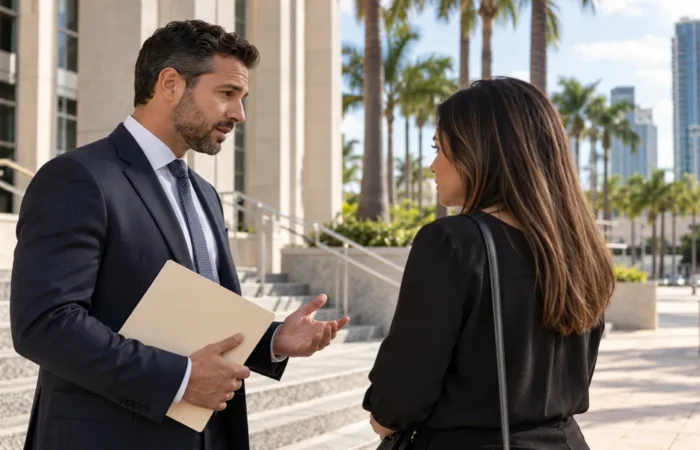
A request for an interview, a subpoena, a search, or a visit from investigators can create serious questions before anyone is arrested or formally charged. A person may not know whether they are being treated as a witness, subject, or potential target. The safest response is usually to slow down, preserve the information received, and obtain advice about the specific request instead of guessing what it means.
A Fort Lauderdale pre-arrest investigations attorney can review the notice, agency contact, documents, timeline, and immediate decisions that may affect a later criminal case. Natalie Lopez, Esq. represents clients in Florida criminal matters and can discuss the circumstances confidentially. Her broader Fort Lauderdale criminal defense practice is a useful starting point when an investigation is developing but the final legal issue is not yet clear.

What Is a Pre-Arrest Criminal Investigation?
A pre-arrest investigation is the period in which law enforcement or prosecutors gather information before a person is arrested or charged. Investigators may interview witnesses, request records, review digital communications, conduct surveillance, seek a search warrant, serve a subpoena, or contact a person directly. Some investigations remain informal for a time. Others become more structured through a target letter, grand-jury process, search, or written demand.
The existence of an investigation does not establish that a crime occurred or that any person is guilty. It also does not make every request optional. The legal effect depends on what was requested, who issued it, the applicable court or agency, and the deadline. A careful response distinguishes voluntary cooperation from a legally compulsory process.
When Should You Contact a Lawyer?
Consider contacting counsel promptly after an investigator asks for an interview, leaves contact information, serves a subpoena, delivers a target or subject letter, executes a search, seizes property, or contacts your employer or family about an investigation. The same is true if a business partner or associate has been arrested, if an account or device is requested, or if you learn that a grand jury may be examining related conduct.
Early advice is not a guarantee that an investigation will end without charges. It can help identify what is known, what remains uncertain, which deadlines apply, and which decisions should not be made casually. Waiting for an arrest may leave less time to preserve video, locate witnesses, collect records, or address a subpoena.
What to Do When an Investigator Requests an Interview
Do not lie, destroy evidence, threaten anyone, or obstruct an investigation. You also do not have to improvise a substantive interview at your home, workplace, or by telephone. You can be polite, obtain the investigator’s name and agency, ask for the request in writing when appropriate, and say that you want to consult an attorney before answering substantive questions.
Do not assume that an investigator’s friendly tone means the conversation is harmless. Do not guess at dates, minimize conduct, repeat another person’s explanation, or fill a gap because silence feels uncomfortable. A lawyer can assess whether a response is appropriate, whether it should be scheduled, what information may be requested, and how to avoid an inaccurate or incomplete statement.
Write down the date and time of the contact, the names and phone numbers provided, the agency identified, the subjects mentioned, and any documents or deadlines discussed. Preserve cards, emails, voicemails, text messages, and letters in their original form.
What If You Receive a Subpoena?
A subpoena may require testimony, documents, or both. Do not ignore it, but do not assume that producing everything immediately is the only option. The subpoena should be reviewed for the issuing authority, response date, requested materials, place of appearance, scope, privilege issues, and instructions about how production must occur.
The current Florida court rules resource links to the state’s criminal-procedure rules. Those rules address subpoenas and related procedures, but the correct response depends on the subpoena and proceeding. Counsel may evaluate whether an objection, protective request, motion to quash, negotiated response, or organized production is appropriate. Never alter, backdate, conceal, or destroy responsive records.
Search Warrants and Searches Before Arrest
Investigators may seek a search warrant for a home, office, vehicle, storage area, phone, computer, or account. Florida’s search-warrant statutes appear in Chapter 933 of the Florida Statutes. The statute and the warrant itself matter; a general internet explanation cannot determine whether a particular search was lawful.
Florida’s Constitution also addresses searches and seizures in Article I, Section 12. The Florida Senate’s Constitution resource is a useful primary reference, but applying those protections requires reviewing the actual warrant, affidavit, location, property, and conduct involved.
Do not physically interfere with officers executing a search. Ask for a copy of the warrant and preserve the property inventory or receipt. Note practical facts after the search, including when officers arrived, which areas or devices were searched, what was taken, who was present, and whether questions were asked. Do not volunteer explanations or consent to an expanded search without legal advice.
Give the warrant, inventory, notices, and your timeline to counsel. A later review may examine the warrant’s scope, supporting affidavit, execution, handling of digital devices, chain of custody, and statements made during the search. These are fact-specific issues and should not be decided from a headline or a generic promise.

Target Letters, Subject Letters, and Grand-Jury Contact
A federal target or subject letter may use terms that have specific meaning in the investigation. The letter should be preserved and reviewed promptly rather than summarized from memory. The U.S. Department of Justice grand-jury guidance explains that a grand jury may subpoena a subject or target, and it discusses the government’s policy concerning notice in some circumstances.
A grand-jury subpoena is not the same as an informal request for a conversation. It can create attendance or production obligations and may involve privilege, immunity, or self-incrimination questions. A lawyer can explain the process, deadlines, and available options. Do not contact other potential witnesses to compare stories, ask them to delete messages, or attempt to coordinate testimony.
Preserve Evidence Before It Disappears
Evidence can be lost through routine deletion, overwritten surveillance, closed accounts, damaged devices, or changes to online platforms. Preserve the original materials you lawfully possess. Keep complete message threads, emails with attachments and headers, photographs, videos, call logs, receipts, location records, contracts, calendars, and relevant business files.
Do not edit an original file to make it easier to read. Make a working copy if needed and keep the original unchanged. Do not log into another person’s account, guess passwords, access a device without permission, or ask a witness to modify a record. Tell counsel what is missing and when you first learned it might exist.
A private timeline can be helpful. Record dates, locations, participants, communications, documents, and what you personally observed. Separate direct knowledge from assumptions and information provided by someone else. Accuracy matters more than creating a polished narrative.
How Florida and Federal Investigations May Differ
A Florida state investigation and a federal investigation can involve different agencies, prosecutors, courts, procedures, and charging statutes. A South Florida matter may involve local law enforcement, the Broward State Attorney’s Office, or a federal agency such as the FBI, DEA, ATF, IRS Criminal Investigation, or Homeland Security Investigations. The agency involved can affect the process, but the label alone does not answer what the person should do.
The Florida Courts criminal-court resource provides general information about state criminal proceedings. The United States Courts overview of federal criminal cases explains the federal process at a general level. Counsel should review the actual notice, agency, court, and evidence before drawing conclusions.
Common Mistakes During an Investigation
- Agreeing to an interview before understanding whether it is voluntary or required;
- Deleting texts, posts, emails, photographs, or business records;
- Calling another person to ask what they told investigators;
- Posting an explanation or accusation on social media;
- Ignoring a subpoena, letter, court notice, or preservation request;
- Guessing about facts instead of saying that you need to check the record;
- Allowing an employee, relative, or friend to speak for you without a clear plan; or
- Assuming that a search or seizure automatically proves the government’s case.
These mistakes can create additional evidence, cause missed deadlines, or make later review more difficult. A calm, documented response preserves more options than an improvised attempt to explain everything immediately.
What a Pre-Arrest Defense Review May Cover
A lawyer may begin by identifying the investigation’s stage and the client’s role. The review can include the agency contact, written request, possible offenses, relevant relationships, electronic records, physical evidence, witnesses, and immediate deadlines. It may also consider whether another matter is connected, such as a federal criminal investigation, drug-related allegation, or firearm or weapon issue.
The objective is not to manufacture a favorable story. It is to understand what can be verified, preserve lawful evidence, make informed decisions about communications, and prepare for possible next steps. Counsel may recommend additional records, a controlled response, a motion, negotiation, or continued monitoring. The appropriate path depends on the facts and may change as information becomes available.
Preparing for a Confidential Consultation
Bring the original letter, subpoena, warrant, inventory, email, voicemail, or message that prompted the consultation. Also bring relevant court documents, a short timeline, contact information for people with firsthand knowledge, and a list of questions. Do not send sensitive information through an unsecured channel until the lawyer provides instructions.
Useful questions include: What is known about the investigation? Is the request voluntary or compulsory? What deadlines apply? What should be preserved? Should any interview be scheduled? Are there related state or federal issues? What work is included in the proposed representation, and how are fees explained in writing?
The Florida Bar guide to hiring a lawyer offers general questions for evaluating counsel. Experience with a similar allegation, clear communication, careful evidence handling, and a realistic explanation of uncertainty are more useful than guarantees.
Related Criminal Defense Issues
An investigation can develop into a court matter involving a search challenge, bond decision, drug allegation, weapon allegation, violent-crime accusation, or probation issue. Natalie Lopez, Esq. can review the relationship between those issues and the existing facts. Readers can also review information about bond hearings, violent crimes, violations of probation, and the firm’s broader criminal-law services.
General information cannot determine whether a person will be arrested, charged, searched, subpoenaed, or prosecuted. It also cannot replace advice based on the actual documents and evidence. Avoid relying on a search result, social-media discussion, or another person’s experience as a substitute for a private legal review.
Frequently Asked Questions
Does an interview request mean I am about to be arrested?
Not necessarily. The request may involve a witness, subject, or target, and the status can change. The request should be reviewed before substantive questions are answered.
Should I ignore investigators until I speak with a lawyer?
Do not ignore a subpoena, court order, or other compulsory process. Preserve the communication, identify any deadline, and obtain advice about the appropriate response.
Can I delete embarrassing messages if they are unrelated?
Do not delete or alter potentially relevant records. Preserve the original information and ask counsel how relevance, privacy, and lawful access should be handled.
What should I do if agents arrive with a search warrant?
Do not physically interfere. Ask for the warrant and inventory, observe practical details, avoid volunteering explanations, and contact counsel as soon as reasonably possible.
Can a lawyer help before criminal charges are filed?
Yes. Pre-arrest work may involve reviewing requests, preserving evidence, advising about communications, responding to subpoenas, and preparing for possible court action. No particular outcome is guaranteed.
Request a Confidential Pre-Arrest Investigation Consultation
If investigators have contacted you or your business in Fort Lauderdale or Broward County, early review can help clarify the request, deadlines, evidence, and next decisions. Contact Natalie Lopez, Esq. or call 954.888.8833 to request a confidential consultation about a Florida criminal investigation.